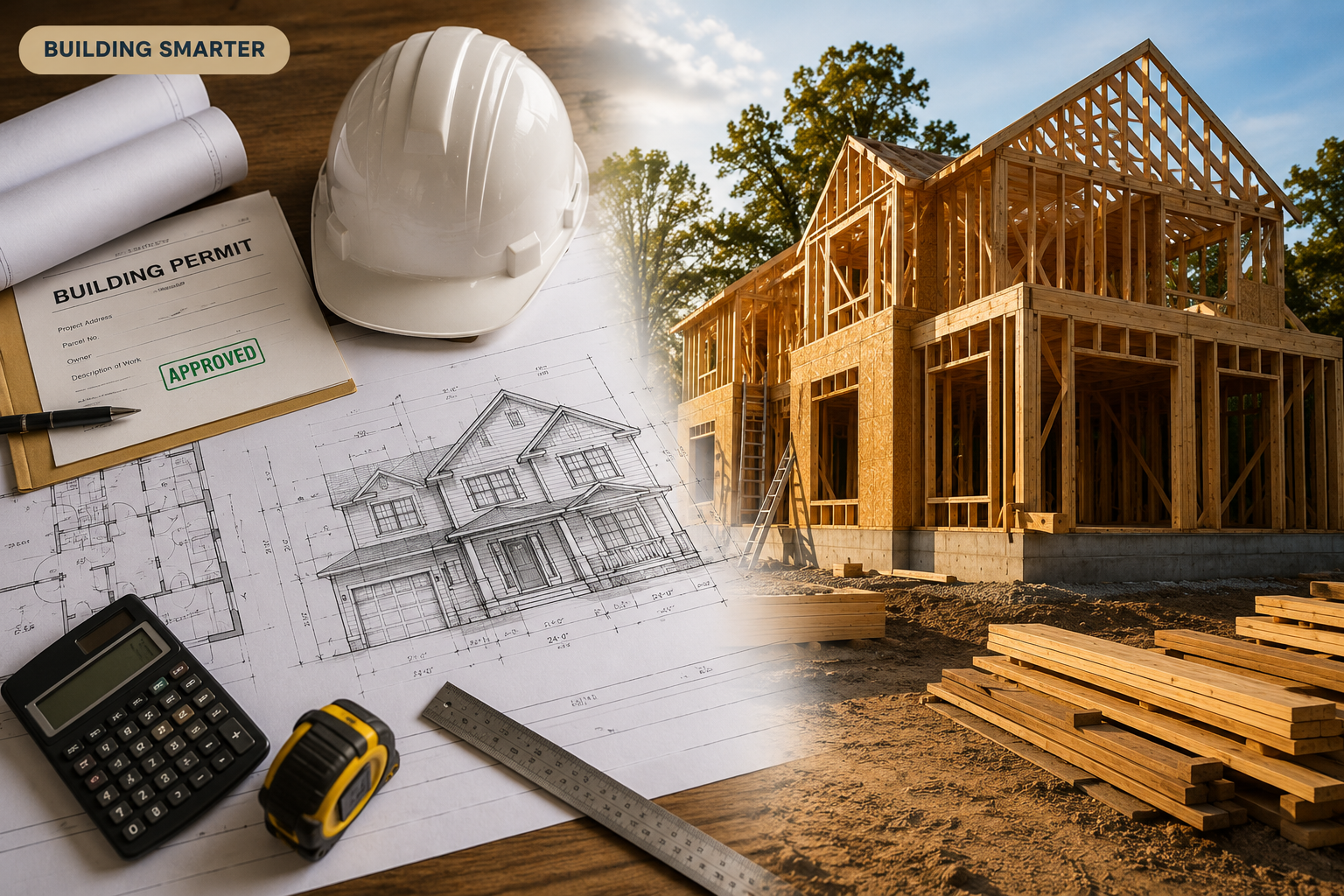

Licensed General Contractor · Licensed New Home Builder in MD · 20+ Years DC, Maryland & Virginia Construction Experience
A contractor I once knew owned a boat in Florida.
The name of the boat? Change Request.
He named it after the single most profitable tool in his business — not his crew, not his equipment, not his reputation. Change requests. The steady stream of add-ons, modifications, and scope adjustments that padded his invoices and paid for his life in the sun while his clients paid for their homes.
That boat has a lot of siblings across DC, Maryland, and Virginia.
If you're planning a custom home build, a major renovation, or a flip investment in DC, Maryland, or Virginia, this post is going to tell you something most people in the construction industry would prefer you didn't know:
You don't need a general contractor. And you never needed one as much as they'd like you to think.
What a General Contractor Actually Does (It's Not What You Think)
Let's start with a myth worth busting: a general contractor does not build your home.
A GC doesn't swing a hammer, run wire, set tile, or install your HVAC system. The actual construction work — every bit of it — is done by subcontractors. The electrician, the plumber, the framer, the roofer, the HVAC contractor, the tile setter. Those are the people physically building your home.
What a GC does is coordinate those people. They manage the schedule, sequence the trades, handle inspections, and communicate between parties. They are, in plain terms, a project manager.
A project manager who charges you 15–30% of your entire construction cost for that coordination. For a full breakdown, see our deep-dive on builder markup on custom homes in the DC suburbs.
On a $1 million custom home in Bethesda or McLean, that's $150,000 to $300,000. On a $1.5 million build, you're looking at $225,000 to $450,000. That money doesn't go toward your home. It goes toward the coordination layer sitting between you and the people actually building it.
And here's what makes it worse: you're already doing more of that work than you realize.
The Dirty Secret About "Saving Time" With a GC
One of the biggest selling points of hiring a GC is that they handle everything so you don't have to. You're busy. You have a career, a family, a life. Let the GC manage the build.
Here's what nobody tells you: you still have to pick everything.
Every floor, every tile, every cabinet, every countertop, every fixture, every paint color, every piece of hardware. That work belongs to you regardless of whether you have a GC or not. Nobody else can choose what you want to live with for the next 30 years.
So you spend weeks — sometimes months — making those decisions. Visiting showrooms. Comparing samples. Second-guessing yourself on grout color at 11pm.
Then your GC charges you a markup on the cabinets you selected yourself.
You did the work. They took the cut.
And even if your GC doesn't charge a markup on materials — which does happen — they're still not giving you a discount for all the work you put in. You did the legwork. They get the credit. The math still doesn't work in your favor.
The Real Risks of the GC Model
Beyond the markup, the traditional GC relationship carries risks that rarely come up in the sales meeting:
Change requests. This is how the boat got paid for. GCs are incentivized to keep initial bids competitive and make up the margin through change orders. Every deviation from the original plan — and there will be deviations — is a billable event. Savvy GCs know exactly how to structure a contract that keeps the door open for this.
Workmanship incentives work against you. A GC paid on project completion is incentivized to finish fast. Speed is their profit margin. When speed and quality conflict — and they do, constantly — you're not the one who wins that argument.
You're locked in. Construction contracts are long-term commitments. Once you're in, getting out is expensive, legally complicated, and emotionally exhausting. If the relationship breaks down halfway through your build, you're not just having a bad day — you're potentially in litigation over a half-finished house.
Personality conflicts are real. You're going to spend 12–18 months in close contact with this person, making high-stakes decisions under pressure. Personality mismatches happen. With a GC, there's no easy exit.
Material choices are limited. Many GCs steer clients toward their preferred vendors and catalog selections. Want something outside their network? That's a change order. And a markup.
So What's the Alternative?
Acting as your own general contractor — what the industry calls owner-building — means you take on the coordination role directly. You hire the subcontractors. You manage the schedule. You own the decisions. For the full step-by-step playbook, see our complete owner-builder guide.
It sounds intimidating. It's less intimidating than you think, for one reason: you don't have to do it alone.
The model that works — especially for $1M+ custom builds in DC, Maryland, and Virginia — is pairing yourself with a construction manager consultant. Not a GC who takes a cut of everything. A consultant who works for you, on your terms, and whose only incentive is your project going well. That's exactly what our owner-builder consulting program is built around.
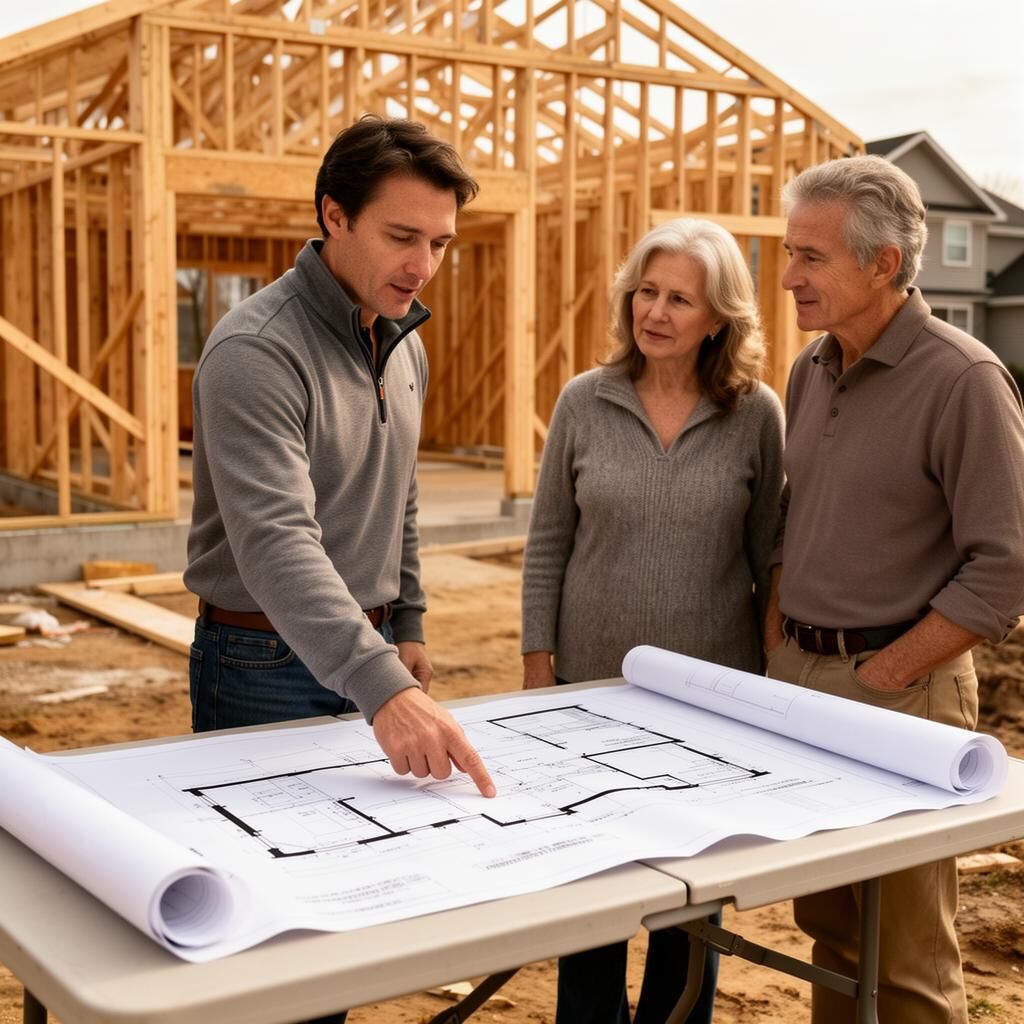
Think of it the way you'd think about any other professional relationship. You don't need to be a doctor to manage your own health — but you need a good doctor in your corner. You don't need to be a lawyer to navigate a legal matter — but you need counsel who knows what they're doing. Owner-building is the same principle. You're in charge. An experienced construction manager is your expert advisor.
How AI Levels the Playing Field
Here's where 2026 is genuinely different from 2016.
AI doesn't build your home. It doesn't replace experience or judgment. But it does something that used to be impossible for the average homeowner: it gives you access to the same analytical tools that experienced builders have always had.
Two specific examples of where this matters:
Gap analysis. Before you sign a subcontractor contract, you can run a gap analysis — comparing the contractor's proposal against your architectural plans to identify anything missing from the scope. What isn't included? What's vague? What could become a change order later? This used to require a trained eye. Now it requires the right prompt and a set of plans.
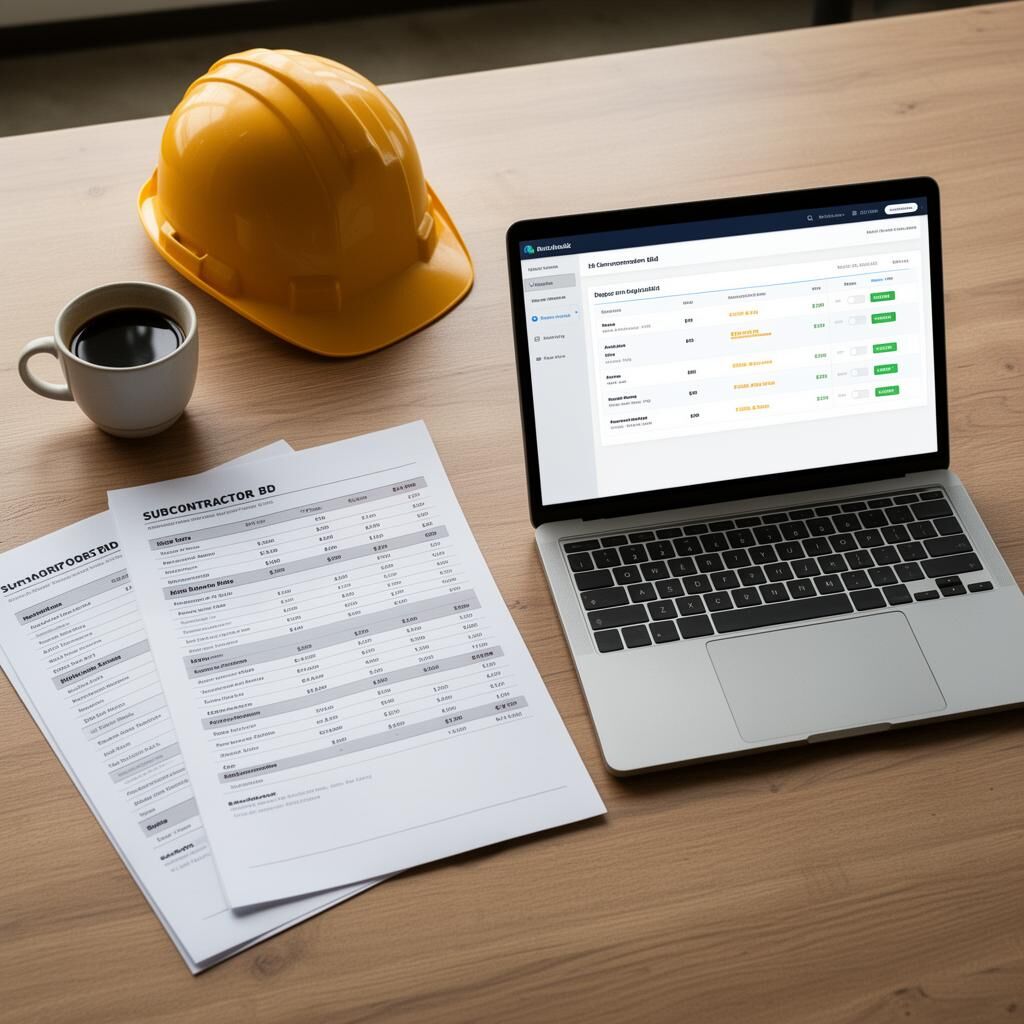
Apples-to-apples bid comparison. When you get two bids for the same job, they're rarely structured the same way. One HVAC contractor includes commissioning, one doesn't. One framer includes temporary bracing, one doesn't. AI can break down both bids side by side and flag where the scopes diverge — so you're comparing actual equivalents, not just bottom-line numbers.
These aren't magic. They're tools. But they're tools that used to be exclusively in the hands of people who had spent decades in the industry. Now they're available to any homeowner who knows how to use them.
Can You Actually Pull Your Own Permits in DC, Maryland & Virginia?
Yes — and this surprises most people.
In DC, Maryland, and Virginia, homeowners can legally apply for building permits in their own name across most jurisdictions, including:
- Montgomery County, MD — Homeowners may apply for building permits in their own name for both new construction and additions, confirmed directly by the Department of Permitting Services. For a deeper walkthrough, see our Montgomery County building permits guide.
- Prince George's County, MD
- Howard County, MD
- Frederick County, MD
- Washington DC — with owner-occupant provisions
- Fairfax County, VA — Homeowners may obtain permits in their own name, confirmed by Fairfax County Land Development Services
- Arlington County, VA
- Loudoun County, VA
- Prince William County, VA
Important: Rules vary by project type — verify with your local permit office before applying. New construction, additions, and renovations each carry different requirements, and policies can change year to year.
Before you get to the permit counter, the other half of the equation is your lot itself. Setback requirements dictate how close you can build to property lines, and those numbers — combined with lot coverage and FAR limits — determine how big of a house you can actually build on your lot. Both are worth confirming before you finalize plans, because they shape what a permit office will approve in the first place.
Objection #1: "But I Don't Know Anything About Construction"
Neither did most successful owner-builders when they started.
You don't need to know everything about construction. You need to know enough to ask the right questions, recognize when something looks off, and make informed decisions. The rest is what your construction manager consultant and your AI tools are for.
You already manage complex, high-stakes situations — businesses, investments, medical decisions, legal matters. A custom home build is complex, but it's not unknowable. It's a sequence of decisions made in the right order with the right information.
Objection #2: "I Don't Have Time for This"
You don't have as much time as you think you're saving with a GC — as we covered above.
You're picking every finish either way. The only question is whether you pay 15–30% markup on top of the work you already did. What changes with owner-building isn't the time you spend on decisions. It's who controls the money, the schedule, and the quality.
Objection #3: "I Don't Want to Get Into a Long-Term Contract"
Then don't. That's the point.
When you act as your own GC, you hire each subcontractor directly for their specific scope. Electrician. Plumber. Framer. HVAC. Each one has their own contract for their own work. No single entity controls your entire project. No long-term commitment to escape if things go sideways. You can replace a sub who isn't performing without blowing up the entire build.
Objection #4: "I Don't Know Which Subcontractors to Trust"
This is the most legitimate objection — and the one a good construction manager consultant solves directly.
An experienced consultant brings their subcontractor network with them. Not a catalog. A real Rolodex built over years of projects in your specific market — people they've worked with, vetted, and trust. That network is one of the most valuable things you're getting access to, and it comes without the GC markup attached to every invoice.
This Works for More Than Just New Construction
Owner-building isn't limited to ground-up custom homes. The same model applies to:
Major Renovations — Whole-house renovations, additions, and gut rehabs where a GC would typically take a significant cut of the total project cost.
Flip Investments — For investors managing rehab projects, the owner-builder model eliminates GC markup and gives you direct control over timelines, budgets, and subcontractor selection — the three variables that make or break a flip's profitability. If that's your focus, see our investor consulting program.
What to Look for in a Construction Manager Consultant
If you're going to pursue the owner-builder path, the consultant you choose matters enormously. Here's what to look for:
- Local market experience — Someone who knows your specific jurisdiction's permit office, inspection process, and subcontractor market. DC, Maryland, and Virginia construction is not generic.
- No markup on your materials or subs — Your consultant should charge for their time and expertise, not take a cut of everything passing through your project.
- Transparent, flexible engagement — Month-to-month or phase-based, not a long-term contract that locks you in.
- Track record on projects like yours — New construction in Montgomery County is different from a flip in Arlington. Make sure your consultant has done what you're trying to do.
- Honest about what AI can and can't do — Anyone telling you AI alone can manage your build is overselling. Anyone who hasn't integrated AI tools into their workflow is behind.
The Bottom Line
The general contractor model made sense when homeowners had no access to information, no tools to analyze plans or compare bids, and no way to coordinate subcontractors without industry connections.
That world is gone.
In 2026, a motivated homeowner in the DMV with the right consultant and the right tools can build a $1M+ custom home without a traditional GC — and keep $150,000 to $450,000 that would have otherwise paid for someone else's boat.
You don't need a GC. You need a system, a consultant, and the willingness to be in charge of your own project.
How Iron Gate Does This
This is the model we've built the iBuild program around.
Here's something that might surprise you: Iron Gate Development is a Licensed Maryland Home Builder and MHIC Licensed Contractor with 20+ years of residential construction experience. We have the same credentials as the builders charging you 15–30% markup.
We just choose to operate differently.
We don't take markups on your materials, your subcontractors, or your change orders. We don't have any incentive to. Instead of positioning ourselves between you and your build and charging for the privilege, we put our licenses, our 20+ years of experience in DC, Maryland, and Virginia, and our subcontractor relationships directly in your corner — as your advisor, not your GC.
We offer four service tiers — iBuild Field Access, iBuild Advisory, iBuild Oversight, and iBuild Executive — depending on how much involvement you want. All four give you access to our vetted subcontractor network, AI-powered plan review and bid analysis tools, and experienced construction management guidance throughout your build.
No markups. No long-term contracts. Cancel anytime.
If you're planning a custom home build, a major renovation, or a flip in DC, Maryland, or Virginia — and you want an honest conversation about whether the owner-builder model makes sense for your project — that's exactly what our free consultation is for.
Schedule a Free Consultation →
No pitch. No pressure. Just a straight conversation from someone who's done this hundreds of times in your market.
Iron Gate Development provides owner-builder consulting through the iBuild program across Bethesda, Potomac, Chevy Chase, Rockville, Gaithersburg, Arlington, McLean, Great Falls, and throughout the DC, Maryland, and Virginia metro area. Remote advisory available nationwide.
Vipin Motwani
Founder, Iron Gate Development — Licensed Maryland Home Builder (#8432), MHIC Licensed Contractor (#114916), 20+ Years of Residential Construction Experience